REVIEW · KATHMANDU
3-Day Guided Safari Tour in Chitwan National Park in Nepal
Book on Viator →Operated by The Great Adventure Treks & Expedition - Private Day Tours · Bookable on Viator
Rhinos and crocodiles aren’t the only stars here. This 3-day Chitwan National Park safari pairs wildlife time with Tharu village culture, all while you’re moving between the park and the Rapti River area.
I like the way this trip keeps things practical: Tharu village activities and a cultural show are built right into the first day, so you’re not stuck waiting around for wildlife to happen. I also appreciate the small-group feel, with a maximum of 10 travelers, which usually means fewer delays and more time with your guide, including help from the operator’s team in Kathmandu (often associated with Mani).
One consideration: the schedule is tight for only three days, and the drinks aren’t included, so you’ll want to plan a little budget for soft drinks or alcohol during breaks.
In This Review
- Key Highlights I’d Prioritize
- The Kathmandu-to-Chitwan Drive: Your First Big Transition
- Day 1: Chitwan Arrival, Tharu Village, and a Jeep Safari Mix
- Day 2: Bird Watching Quiet Time, Then the Rapti River Canoe for Crocs
- Day 3: The Return Drive and Flexible Drop-Off Options
- What You Get for the $199 Price (and What You Don’t)
- Small Group Size and “Free Admission” Lines: How It Impacts Your Day
- Best Fit: Who Should Book This Chitwan Safari?
- Practical Tips That Make the Wildlife Days Easier
- Should You Book This 3-Day Chitwan Safari Tour?
- FAQ
- How long is the 3-day Chitwan National Park guided safari?
- Where does the tour start?
- Does the tour offer pickup?
- What activities are included in the itinerary?
- Are meals included?
- What is the price per person?
- How many travelers are in a group?
- Are drinks included?
Key Highlights I’d Prioritize
- Tharu Village + Jeep Safari Day 1: culture and action on the same day, not separated into different trips.
- Morning bird watching: calmer wildlife time early in the day, when animal activity tends to feel more natural.
- Rapti River canoe ride: a different angle for seeing wildlife, with crocodiles sunbathing near the banks.
- Small group of up to 10: easier logistics, less crowd noise, and usually faster organization in the field.
- Meals included for 3 days: 2 breakfasts, 2 lunches, and 2 dinners are part of the package price.
The Kathmandu-to-Chitwan Drive: Your First Big Transition
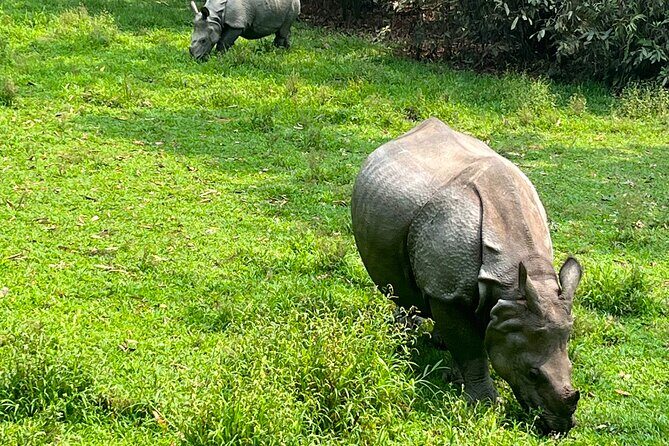
Most Chitwan safari tours start with a long-ish move from Kathmandu, and this one does it the old-school way: you travel for about five hours before you even reach the park zone. That matters more than you might think. The drive breaks the trip into two moods—city-to-nature—and it helps you arrive ready to focus once you check in.
Once you get to Chitwan, the plan is straightforward. You’re greeted by the hotel/resort staff and transferred to your accommodation, then you review the itinerary details. That early orientation is worth it in Nepal, where timing can feel fluid. A guide-led plan also helps you avoid the classic problem of spending your first day asking where to go and what to do.
This tour is priced for a straightforward experience, not a luxury retreat. With pickup offered and a mobile ticket, the logistics tend to be smoother for independent travelers who don’t want to wrangle every step themselves. And since confirmation happens at booking time, you’re not left guessing about whether arrangements are locked.
There’s also a planning hint hidden in the timing: this kind of safari is often booked around a week ahead (on average, about 5 days). If you’re traveling in peak months, I’d rather you book earlier than later so you get the exact dates you want.
You can also read our reviews of more guided tours in Kathmandu
Day 1: Chitwan Arrival, Tharu Village, and a Jeep Safari Mix
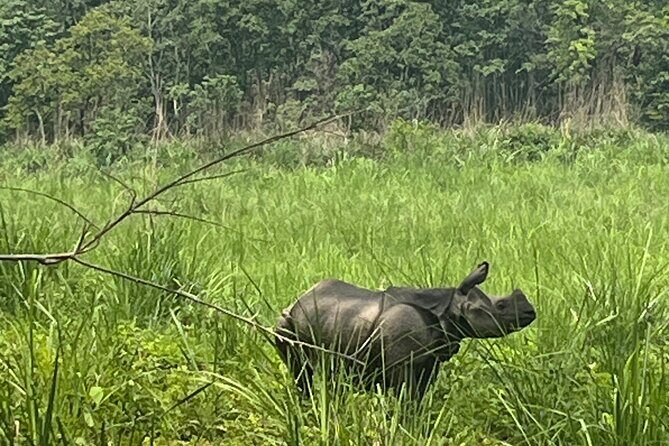
Day 1 is where this tour earns its keep, because it doesn’t treat culture as a sidebar.
After you arrive in Chitwan and settle in, you head into Chitwan Tharu Village for a mix of activities. The Tharu community is the cultural heart of this region, and the point of the village portion isn’t just photos. It’s an organized, guided introduction to daily life and local traditions that sit alongside the park experience.
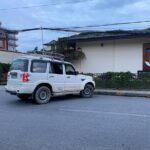
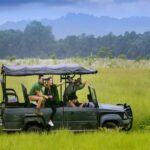
You’ll also get a jeep safari tied to the day’s programming. Jeep safaris are a classic Chitwan setup because they let you cover ground without burning your whole day on foot. The trade-off is simple: it’s not quiet-wildlife listening time. It’s wildlife spotting with movement. That can be great if you want results without waiting.
As night falls, you’re treated to a Tharu Cultural Show. This is a smart pacing choice. After a travel day, wildlife time can feel energy-draining. A cultural performance helps you reset while still keeping you connected to the region.
Practical note: you’ll be traveling from Kathmandu, then stepping into village and safari activities fairly soon. I’d plan for a slightly “busy” Day 1 pace—comfortable, but full.
Day 2: Bird Watching Quiet Time, Then the Rapti River Canoe for Crocs
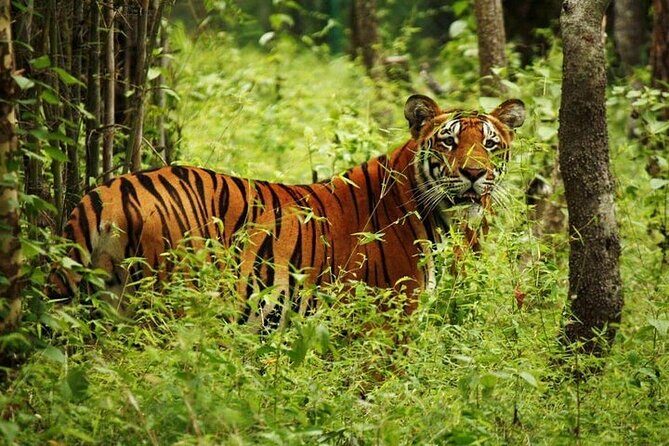
Day 2 is built around two very different forms of wildlife watching, and that contrast is what makes the day feel like more than just repeating the same safari pattern.
It starts with early morning tea, followed by bird watching in the park area. Bird watching might sound like the “extra” activity on paper, but it’s actually a big win. Early hours tend to bring more noticeable movement, and birds are often active even when larger animals are slower to show themselves. If you love nature detail—sound, color, small behavior changes—this time slot is the kind you don’t want to skip.
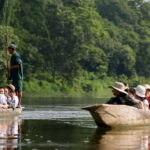
Later, you switch from walking/observation to a canoe ride along the Rapti River. This is one of the most distinctive parts of Chitwan safari life because the river corridor draws wildlife to predictable spots. The goal here is to watch crocodiles sunbathing along the river banks, plus other wildlife close to the waterline.
Canoeing changes your viewpoint. Instead of scanning from a distance with a jeep, you’re moving slowly in a more controlled setting. It also tends to feel less about speed and more about patience—spot, wait, observe.
You should know that crocodile viewing can be a little hit-or-miss depending on time, weather, and how the riverbank activity looks that day. Still, the canoe component gives you a strong chance at seeing animals up close compared with only doing land-based routes.
Day 3: The Return Drive and Flexible Drop-Off Options
On Day 3, the tone shifts from wildlife hunting to travel wrap-up. You’ll head back from Chitwan, with options to return to Kathmandu or Pokhara or Lumbini. That flexibility can be helpful if you’re building a broader Nepal itinerary that includes hill-country sightseeing or cultural stops.
This is also why three days is such a workable format for many travelers. It gives you time for two wildlife-focused days (including a river canoe) and a culture day, without turning the whole trip into nonstop transit.
The trade-off is that you’re not staying long enough to treat wildlife as a guarantee. Chitwan is real nature—animals don’t follow your calendar. What you’re buying with this tour is good structure: enough time to try multiple observation styles (jeep, birds, canoe), plus meals and local guidance handled for you.
If you’re the type who wants lots of repeated chances—like several full-day safaris—then you might eventually feel this is short. But if you want the highlight mix and a clean finish back toward other Nepal destinations, three days is a strong fit.
What You Get for the $199 Price (and What You Don’t)
Let’s talk value in plain terms. $199 per person for a 3-day guided safari from Kathmandu is on the budget-friendly side for a structured wildlife-and-culture package—especially when you compare it to the cost of arranging transport and guides separately.
What helps the value:
- Meals included: 2 breakfasts, 2 lunches, and 2 dinners are part of the package.
- Pickup offered: transportation planning matters a lot in Nepal.
- Park admissions appear covered for the national park portions (listed as admission ticket free in the itinerary segments).
- Mobile ticket: less paperwork, easier day-of logistics.
- Small group size: max 10 travelers.
What you should budget for:
- All drinks (soft & hard) are not included.
- Personal expenses are not included.
So the key is how you travel. If you’re disciplined and keep drinks minimal, the price feels like a solid deal. If you expect to buy lots of drinks every meal, you’ll want to plan for that so the final cost doesn’t surprise you.
Also, because this is guided, you’re paying for the coordination that makes wildlife days run smoothly. That’s often where independent itineraries fall apart: not the ticket, but the timing.
You can also read our reviews of more tours and experiences in Kathmandu
Small Group Size and “Free Admission” Lines: How It Impacts Your Day
This tour caps at 10 travelers, which affects your experience more than people think. In wildlife areas, the friction points are usually simple:
- waiting for vehicles,
- figuring out meeting times,
- and losing time when someone can’t find the group.
A small group keeps those problems smaller. It also makes it easier for your guide to adjust pacing when a birding stop has something worth lingering over.
The “admission ticket free” notes in the itinerary segments suggest that the tour is handling entry for the core national park time, at least for those listed activities. That’s good for value because it reduces the number of unknowns you’d face if you were building your own schedule.
Still, I’d keep one mindset: the tour is structured, but wildlife watching isn’t a vending machine. Your day depends on what’s visible and active. The best way to judge this tour is that it gives you multiple ways to watch wildlife (land, river, and early bird time), not just one.
Best Fit: Who Should Book This Chitwan Safari?
This one is built for travelers who want an efficient nature-and-culture mix. It also says most travelers can participate, which usually means the activities are kept at a reasonable level for a general audience.
It’s a particularly good match if:
- you’re short on time and want a true Chitwan highlight in 3 days,
- you like a mix of culture and wildlife (Tharu village plus national park time),
- you want a small group guided experience rather than a large crowd safari,
- you’re traveling solo and appreciate an organized plan.
It may not be the best match if:
- you need lots of downtime,
- you expect luxury amenities,
- or you want maximum safari repetition with no cultural components.
Practical Tips That Make the Wildlife Days Easier
You can’t control animal behavior, but you can control your comfort and your ability to enjoy the experience when wildlife is (or isn’t) cooperative.
- Dress for warm days and cooler mornings: bird watching starts early, and river time can feel cooler than you expect.
- Bring sun protection: jeep time and river edges both expose you to strong Nepal sun.
- Pack light insect protection: you’ll be outside for long stretches, especially around river and vegetation areas.
- Bring a little cash for drinks: since drinks aren’t included, have a plan so you’re not stuck at the end of the day trying to find an ATM.
- Keep your schedule flexible in your own mind: if you’re fixated on one animal species, nature can disappoint. A wider wildlife mindset makes the trip better.
If you’re serious about photos, keep your expectations realistic. The canoe ride and jeep safari give you chances at sightings, but you’ll still want to practice steady patience rather than sprinting after every possible moment.
Should You Book This 3-Day Chitwan Safari Tour?
If you want a guided intro to Chitwan National Park that blends wildlife with Tharu culture, this is a strong option. The package works because it offers different wildlife-viewing styles in a short window: early birds, river crocodile viewing, and jeep safari movement, plus a cultural show that gives the trip meaning beyond animal spotting.
I’d book it if:
- you like structured days,
- you value included meals,
- and you want a small group experience around a key Nepal wildlife area.
I’d hesitate if:
- you’re the type who needs lots of repeat safari hours to feel satisfied,
- or you dislike the idea of paying extra for drinks during the trip.
Bottom line: at $199, with meals included and a tight, well-paced plan, this tour is built for travelers who want Chitwan’s core experiences without turning the trip into a logistical project.
FAQ
How long is the 3-day Chitwan National Park guided safari?
It runs for about 3 days.
Where does the tour start?
The tour is based out of Kathmandu, Nepal, and you travel from Kathmandu to Chitwan.
Does the tour offer pickup?
Yes, pickup is offered.
What activities are included in the itinerary?
You can expect Chitwan National Park time plus a Chitwan Tharu Village tour, a jeep safari, bird watching, and a canoe ride on the Rapti River, along with a Tharu Cultural Show.
Are meals included?
Yes. The tour includes 2 breakfasts, 2 lunches, and 2 dinners.
What is the price per person?
The price is $199.00 per person.
How many travelers are in a group?
The maximum group size is 10 travelers.
Are drinks included?
No. All drinks (soft and hard) and personal expenses are not included.
If you want, tell me your travel month and whether you’re continuing to Pokhara or Lumbini, and I’ll help you choose the best drop-off option for a smoother overall itinerary.